Understanding the Causes of Concrete Deterioration
Maryland | Virginia | Rockville | Bethesda
Are you interested in identifying the causes of concrete deterioration in your Maryland, Virginia, Rockville, or Bethesda commercial or industrial concrete structure?
Keep reading to learn the different causes and types of concrete deterioration that may be affecting your structure.
If you’d like to discuss concrete deterioration with the experts, call (301) 261-4933 or click here and fill in the form and a specialist will contact you shortly.

Two Forms of Concrete Deterioration
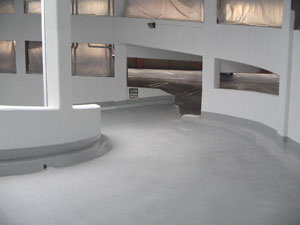
Concrete deterioration occurs in two forms, often simultaneously.
- Deterioration of the concrete itself
- Anodic or cathodic breakdown of the underlying steel matrix
Let’s go over the causes of each kind of deterioration in more detail.
Types of Concrete Deterioration Causes
- Carbon Dioxide
- Chlorides
- Water
- Freezing and Thawing
- Shock Heating
- Overloading
Carbon Dioxide:
Believe it or not, carbon dioxide in the air we breathe can cause the deterioration of
 concrete. It can make its way through the porous concrete and cause real problems.
The steel matrix embedded in reinforced concrete actually depends on the alkalinity of the concrete itself for protection from corrosion.
Calcium hydroxide in the concrete mix is responsible for the required alkalinity, but it is compromised when carbon dioxide is allowed to react with it. The reaction is capable of decreasing the pH to an undesirable level, exposing the steel for corrosion.
Chlorides:
When allowed to deeply penetrate concrete, chlorides can present a serious problem for the lifespan of a structure.
Chlorides are one of the most common causes of concrete deterioration. They can be found in:
- Deicing salts
- Chloride contaminated water used in the mixing process
- Deserts, coastal regions, and even seawater
If chloride makes its way through the surface and to the steel, it can lead to the breakdown of the layer of the steel, which is responsible for protection from corrosion.
Water:
Water, regardless of temperature, can cause cathodic corrosion if it is able to interact directly with embedded steel.
When water is able to react with oxygen to form hydroxyl ions in the vicinity of the steel matrix, corrosion proceeds.
Freezing and Thawing:
Water can also cause of concrete deterioration with its expansive and contractive properties related to freezing and thawing.
For horizontal surfaces, where standing water is allowed to collect, freezing and thawing will gradually make the concrete more permeable, which further exposes the reinforcement to carbon dioxide, chlorides, and water. When water makes its way into small holes and then freezes, the expansion damages the surrounding concrete and widens the holes over time.
The same potential for damage applies to water which has found its way into cracks.
Shock Heating:
Fire or lightning can threaten the integrity of concrete very rapidly.
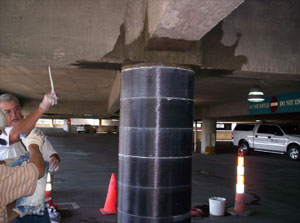
When the surface is exposed to the extreme heat of fire or lightning, the outer layer expands due to the temperature increase. The inner layer remains at a much cooler temperature and the outer layer can break away if the difference between temperatures breaks threshold.
The reverse process is also a possibility when the sprinklers, or rain from a storm, cool the outer surface too quickly and cause it to break away.
Lightning is a bit more complex since concrete conducts electricity. The electricity prefers the embedded steel so if there are any discontinuations, the voltage will dissipate in a heat explosion. Temperature differentials will negatively impact the concrete structure in a similar manner to that described above.
OVERLOADING:
When a load exceeds the limit and the steel structure starts to bend, you can expect concrete cracks and resulting damages.
It’s always important to be cognizant of the weight limits of your concrete structure.
Where Can You Turn to Prevent and Repair Concrete Deterioration?
Seeking solutions for your industrial or commercial concrete deterioration problem in Maryland or Northern Virginia?
With decades of experience, Concrete Restoration is the leading concrete services contractor in VA, DC, and MD when it comes to repair, restoration, resurfacing, and waterproofing all types of concrete deterioration.
But don’t take our word for it. Take a look at the testimonial below.
Top Quality Concrete Contractor!
“Recently my parking garage had started receiving some negative comments. I was afraid it would start impacting my business so I broke down and called Concrete Restoration. They did a great job!
They filled and sealed all the cracks in the walls and foundation and added a fresh coat of waterproofing. I’d recommend them to anyone. Thanks, Concrete Restorations!”
-John Bristow
Alexandria, VA
Contact Concrete Restoration Services Today!
To schedule an appointment or ask questions, call us today at 301-261-4933 or click here to fill out our online contact form.
We will give you the help you need to restore your concrete structure before the deterioration rate accelerates, costing you more money and putting the safety of its inhabitants at risk. Contact us today to learn more!
Go from Causes of Concrete Deterioration back to Concrete Deterioration Main Page
Go back to the Concrete Restoration HOMEPAGE